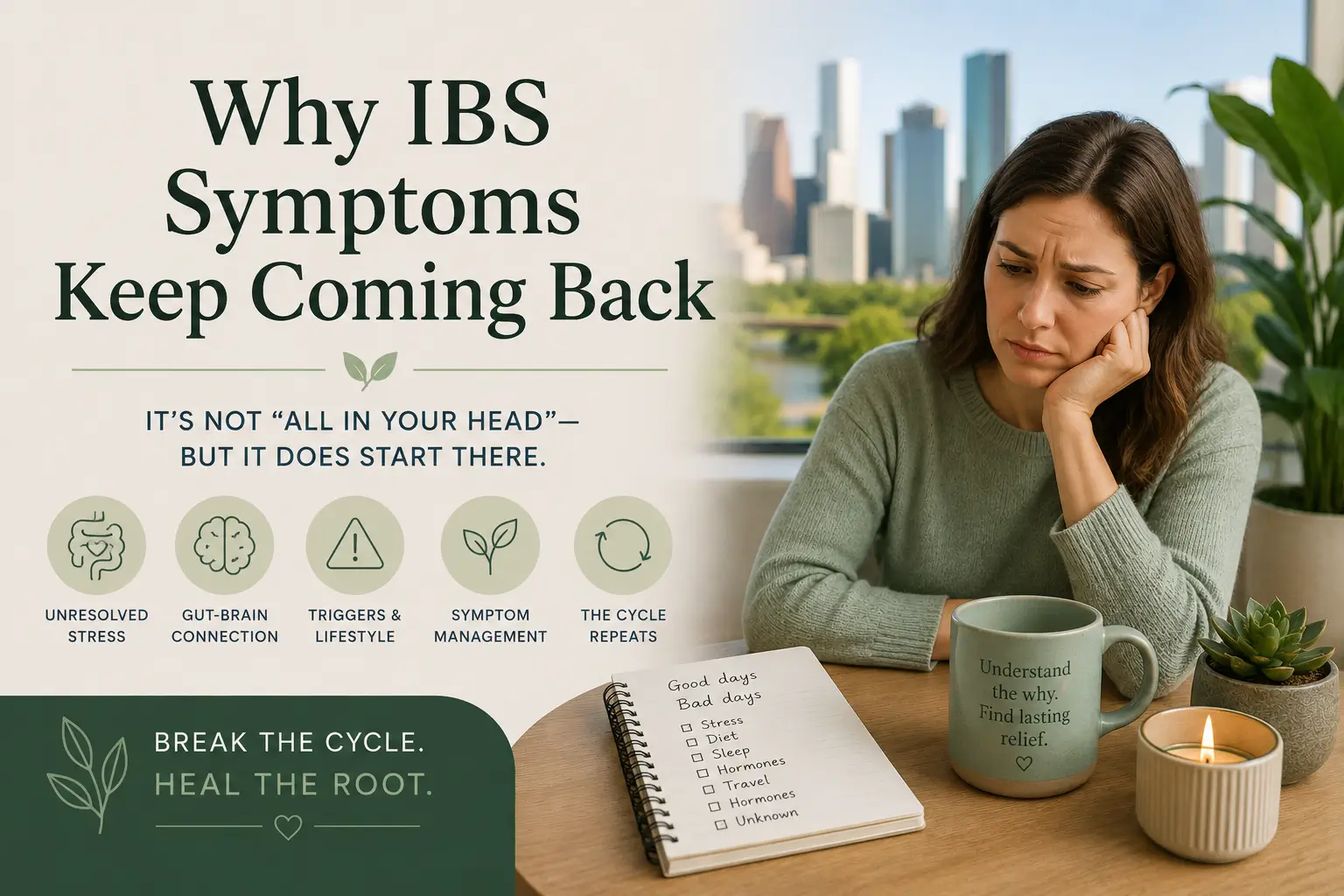
When IBS symptoms keep coming back — even after a stretch where things finally felt under control — it’s one of the most frustrating parts of living with the condition. You change your diet, you cut out a trigger food, things improve for a while, and then the bloating, cramping, or urgency returns. If that pattern sounds familiar, you’re not doing anything wrong. There’s a real reason it happens, and understanding it is the first step toward lasting relief.
At IBS Relief Now in Houston, Dan Perez works with people who have been stuck in exactly this cycle for years. Here’s what’s actually going on, and what it takes to break it.
The IBS Cycle, Explained
IBS tends to run in a self-reinforcing loop. Symptoms cause stress and worry. That stress heightens the sensitivity of your digestive system. The more sensitive your gut becomes, the more easily it flares — which causes more stress. Round and round it goes.
This is why so many people feel like they’re managing IBS rather than moving past it. Each individual flare-up gets treated, but the loop driving it stays intact.
Why Temporary Fixes Don’t Last
A lot of common approaches target only the physical symptoms. Dietary changes, fiber adjustments, and over-the-counter remedies all have their place and can bring real short-term relief. But on their own they often don’t address the brain-gut signaling that keeps the cycle alive.
That’s the key insight from modern IBS research: IBS is best understood through a biopsychosocial model, where physical, psychological, and lifestyle factors all interact. When a treatment only touches one part of that picture, the symptoms tend to find their way back.
When IBS Symptoms Keep Coming Back: The Role of Stress and Sensitivity
Stress is one of the biggest drivers of the cycle. When you’re under sustained stress, your nervous system stays in a heightened “alert” state, and your gut becomes more reactive. Over time the body can become conditioned to respond strongly to even minor triggers — a stressful workday, a rushed meal, or simply the anxiety of wondering whether symptoms will strike.
This conditioning is learned, which is genuinely good news: what’s been learned can be retrained.
How to Actually Break the Pattern
Lasting improvement comes from interrupting the loop rather than just treating each flare. In practice that means:
- Lowering baseline stress so the nervous system isn’t constantly primed
- Calming the gut’s oversensitive response to triggers
- Building consistent daily habits that support digestion
- Using guided techniques that settle the nervous system directly
This is precisely where gut-directed hypnotherapy fits. It’s a clinically studied approach — recommended in North American and European gastroenterology guidelines — that works on the brain-gut connection at the center of the cycle. Rather than chasing symptoms, it helps retrain how your body responds to them in the first place. Across published trials, it has produced meaningful, lasting symptom improvement for a large share of IBS patients.
A More Complete Solution
The IBS Relief Now program is a structured, five-session approach designed to do exactly this kind of retraining. By combining gut-directed hypnotherapy with stress-management techniques you can keep using on your own, the aim is to break the cycle rather than briefly pause it. Sessions are available in person at Dan’s Northwest Houston office or by Zoom anywhere in Texas.
The Bottom Line
If your IBS symptoms keep coming back, it’s because the underlying brain-gut cycle is never being addressed — only the surface symptoms are. A more complete approach that calms the nervous system and retrains the gut’s response is what makes relief stick. If you’re in Houston and tired of the loop repeating, book a free, confidential 20-minute strategy session with Dan using the scheduling link on this page.